

Artificial Intelligence has been a game-changer for journalists and newsrooms in many ways. Transcription, translation and audio enhancement tools are saving hours of our time spent on mundane, routine tasks. But there is also no denying that AI poses a threat to journalism’s bottom line by serving as a substitute source of sought-after information.
In 2026, an article crafted with experience and rigor that answers readers’ burning questions is less likely to show up on the top of their screen compared to a predictive answer from a large language model (LLM) like ChatGPT or Claude.
Since the leading search engine, Google, offers AI-generated summaries and millions turn to LLMs, the number of search results that lead to people clicking on websites has dropped by around 33% according to the Reuters Institute for the Study of Journalism. Something Google continues to deny.
Meanwhile many newsrooms across geographies are feeling the pinch as their website traffic declines and so does their programmatic advertising revenue.
To tackle this challenge, New Narratives (NN), with support from Sida, partnered with media consultants from InOldNews on a 6-month project. The team set out to reimagine what a newsrooms’ relationship with its audience could be. The results of this exercise were strategic audience engagement and revenue development activities that were institutionalized at FrontPage Africa (FPA), Liberia’s leading newspaper. The paper, already accustomed to setting the agenda of news coverage for the country, is now gaining new reach and engagement on digital platforms. This has helped them get an edge over international news publications in terms of speed, while also generating new ways of monetising their reach.
Reaching audiences isn’t as straightforward as writing SEO headlines and using the right tags anymore. The rules of the game have changed drastically in the last two years. The strategies and best practices that built successful digital media businesses over the last couple of decades have quickly become redundant. Leaving journalists and newsrooms wondering how they can continue to thrive while upholding their core values.
FPA holds a special place in the Liberian media space. Launched in 2005 after the end of the second civil war, FPA became a place where Liberians, including the diaspora, turned to for news. Twenty years later, stories covered in FPA get referenced all the time. Hop into a cab in the capital city, Monrovia, and you’ll hear the radio hosts read and debate stories from the paper on your way to work. FPA’s Facebook posts generate millions of views and tens of thousands of interactions every month.
Despite playing a significant role, the forces of digital tides can change how our audiences behave and spend their time. Drawing attention away from the work journalists at FPA sometimes risk their safety for.
Manon Verchot & Sanshey Biswas, media consultants from InOldNews studied the digital content landscape in Liberia to try and understand how FPA could claw back the audience it had spent decades serving. The result was 25 weeks of constant experimentation and iteration. This helped them turn their ideas into tried and tested strategies which they would build systems for.
Manon & Sanshey have been doing this dance all their journalistic careers — sometimes in large newsrooms like the second largest English paper in India to small local vernacular newspapers with an audience of a few hundred thousand. This experience, mixed with a deep understanding of the creator economy, helped them build systems that would institutionalize strategies for engagement and revenue.
“Journalism in the digital era has seen the line between business strategy and editorial blur more than ever before,” says Manon. “But what we’ve seen is that there are ways to develop business strategies that allow newsrooms to maintain their journalistic principals.”
Journalists at FPA and NN are now promoting their stories with social video formats that are popular with younger audiences on Tiktok and Facebook. These videos are helping them grow an audience base between the ages of 18-35 in a country where 63% of the population is under the age of 25.
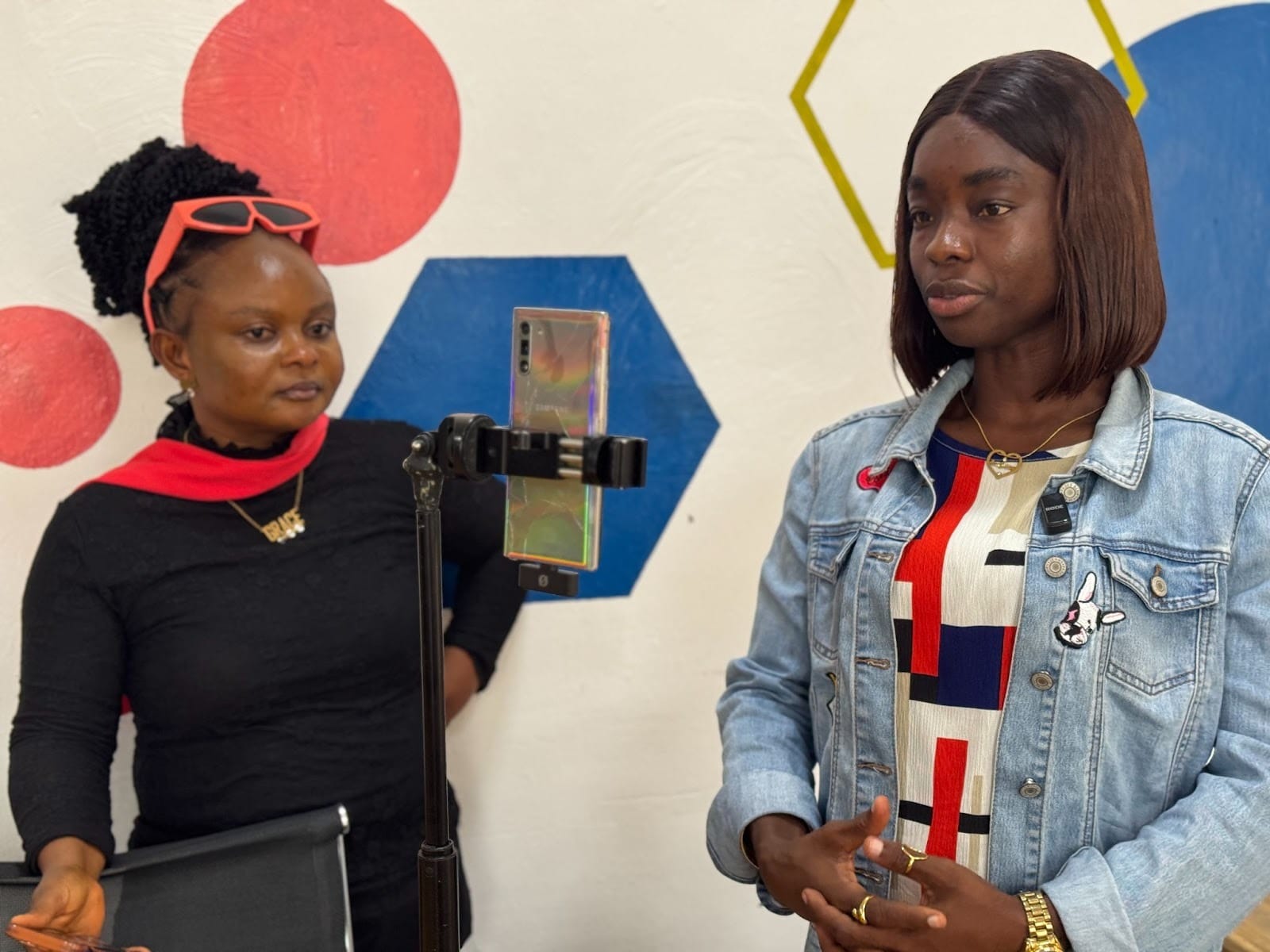
“We keep hearing that younger audiences are gravitating towards short videos because of decreasing attention spans but not enough about how social media platforms promote shorter videos by design,” says Sanshey. “So, it is kind of a loop where newsrooms are stuck between user behaviour and algorithm bias. It’s no surprise that even older generations are also feeling the draw to shorter videos. This is something we have noticed happen across geographies through our work on social video platforms.”
FPA also started posting captioned image posts that became a makeshift discussion space to debate everything ranging from the demolition of a political party’s headquarters to Trump’s awe at the Liberian President’s fluency in English. These photo posts are easy for audiences to share with friends and family in a country where internet access is really expensive. In the case of Trump’s interaction with Liberia’s president, the speed with which photo posts could be made allowed FPA to beat international organisations with much larger resources such as the New York Times, BBC, Reuters and others, to the story.
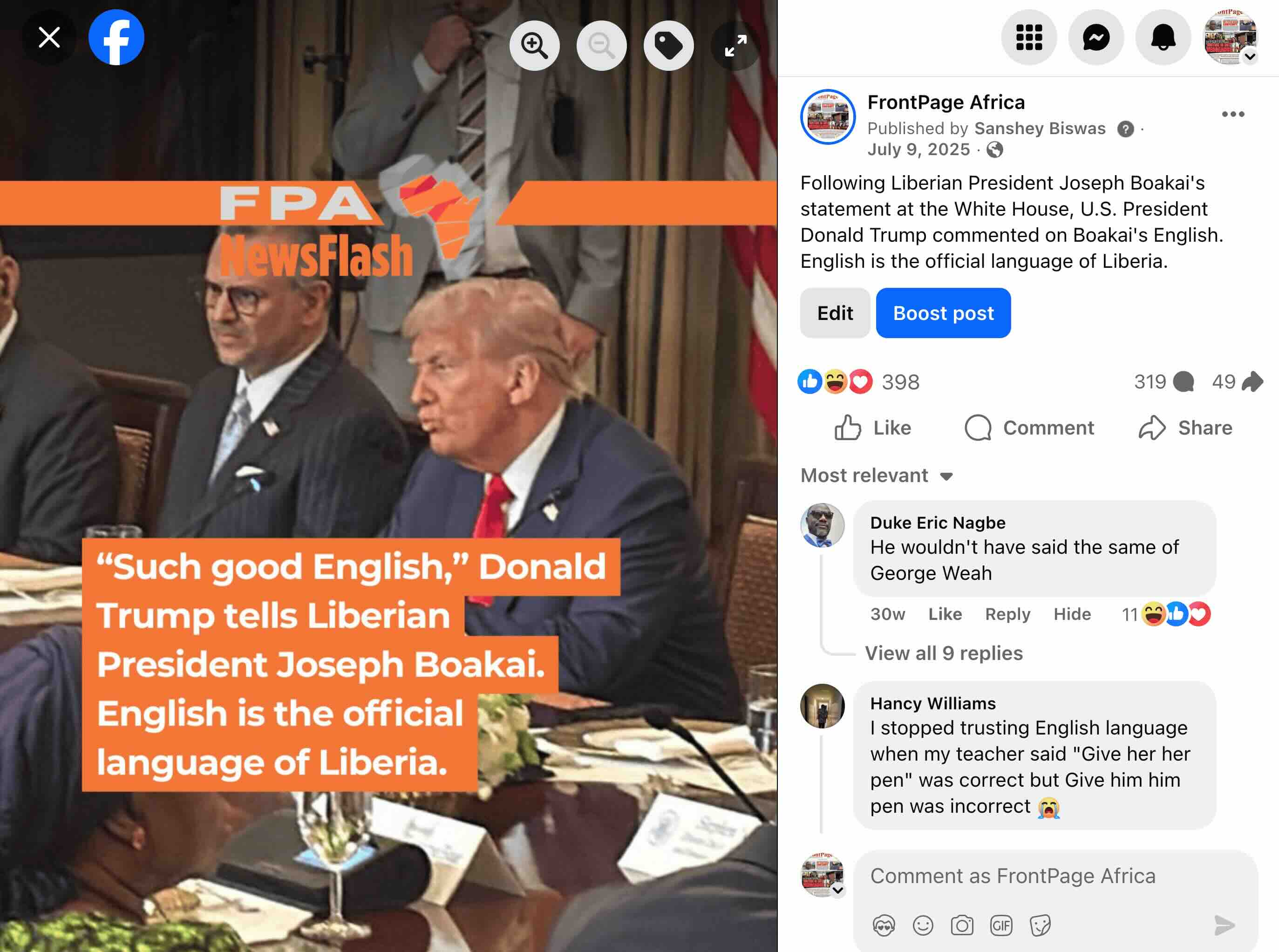
Tapping into engaging visual formats helped FPA meet the audience where they were spending most of their time — on platforms like Facebook. And it did so with clear FPA branding to promote brand recognition even when the content was being downloaded and shared via WhatsApp. These posts not only boosted engagement, but also set up a new revenue stream via advertising and sponsorships which the sales team can sell in addition to the sought-after print space. Monetizing a growing audience of over 267,000 followers on Facebook alone.
But over-reliance on social media for reaching audiences can pose similar challenges as over-reliance on search. Something that newsrooms have been learning the hard way for a while. So building a product that allowed FPA to directly reach their audience was a priority for the team at NN and InOldNews.
Analytics showed that a significant portion of FrontPage Africa’s readers are in the diaspora, in countries like the United States and United Kingdom. And since these audiences do not receive the print newspaper, the team saw an opportunity to distribute the paper online for this audience.
Starting in August, readers could pay for a subscription to the ePaper — a PDF version of the print product sent directly to their email. In addition to the ePaper, the team also launched a free newsletter on weekends that summarizes the top stories in Liberia from that week, and directs readers to the website for more information. Since its launch, the newsletter has brought FPA an additional 220,000 views. It has also allowed FPA to directly reach nearly 6,000 subscribers directly.
The successes of the ePaper and new social media formats for FPA show that audiences are still hungry for the journalistic perspective. And that newsrooms still play an important role in sparking conversations and civic engagement.
However, the most important outcome of this project has been FPA’s ability to continue to adapt to the constantly changing media landscape so that they continue wading through the next big thing in journalism.
If you'd like to know more about our work or request a consultation, please email us at editor [at] inoldnews.com